Wednesday, October 09, 2013

The more things change, the more they stay the same

Zaphod Beeblebrox, Galactic President and just this guy, y'know?
It seems like only yesterday when I began this blog with the intention of by-god-speaking-my-mind. It also seems like only yesterday when I more or less abandoned this blog for more specifically-focused blogs where I could by-god-speak-my-mind about specifically-focused things, and so I created a blog about alternative health care, a blog about religion, a blog about Freemasonry, and a blog about insurance and legal services.

And then it only seems like yesterday when I more or less abandoned all of my blogs and began instead briefly posting meaninglessly on MySpace and then after a (very) short 140-character-at-a-time adventure on Twitter I finally homesteaded a place on Facebook and became a hoopy frood.

My first two posts back in July 2005 were about how Big Pharma (the medical-pharmaceutical industrial complex) was using its power to denigrate alternative health care modalities, and about how a medical doctor had left an infant blind and comatose by accidentally hooking a breathing apparatus for the child up to a carbon monoxide source instead of the intended oxygen source.

Those are the very same types of things I would take note of and and get agitated about and write about today. Only in shorter posts. And on Facebook instead of in a blog.

Hopefully I'll discover new and fun and exciting and meaningful things to blog about. Looking at the long list of links on the sidebar of this blog, it looks like once upon a time I was into spiritual and metaphysical things both deep and profound. I wonder what ever happened to that part of me?

After several false starts (if thinking about it could be called a "start") here I am, finally writing a new blog post on my original blog, this the aptly named "Wave Function Collapse."

Basically, wave function collapse is a scientific term that means that something only happens when you look at it. The phenomenon in which a wave function — initially in a superposition of several different possible eigenstates — appears to reduce to a single one of those states after interaction with an observer: the reduction of the physical possibilities into a single possibility as seen by an observer. Or, in my case, commented on by the observer, me.

Or at least this is what I was thinking when I chose the blog's title in 2005... but then, I was reading a lot of Robert Anton Wilson and Douglas Adams at the time.

So anyway, perhaps I've come back to my roots. Maybe it has to do with karma, or the Circle of Life. Or maybe it's just that now that "Breaking Bad" has ended and "Lost" is but a fond memory, I have more time to think (and maybe write down some of those thoughts).

Well, that's it for now. The wave function is collapsing... Aieieieieie!

Friday, August 05, 2011

It's always your choice

"Be miserable. Or motivate yourself. Whatever has to be done, it's always your choice." -- Dr. Wayne Dyer

What is it all about?

"What is it all about? To get things done? No! Because you do them, and you undo them, and you do them, and you undo them, and you do them, and you undo them.... What is the point in all of it? It is the thrill of the process along the way. Physical human minds keeps thinking, 'We have to be going towards some end.' And you kill each other by the millions trying to decide what is the appropriate end that you are all going toward. And we say: well, there's your flawed premise. Because there is no end that you're going toward. We are all on a perpetual cycle of joyous becoming. We will never get it done, ever, ever, ever, ever." -- Abraham

Tuesday, January 31, 2006

Earth's immune system trying to get rid of us?


"I think our planet’s immune system is trying to get rid of us and should. You know, after the Spanish Inquisition and the Roman games and burning women in squares — public squares, and World War I and World War II and the Holocaust and Nagasaki and all that." — Kurt Vonnegut, 2005

Saturday, January 07, 2006

Don't go cuckoo over avian flu


Links to many great articles that put the Avian Flu Panic into a less than scary perspective can be found over on the Other Blog AltHealthNews.com. I especially like the one reprinted below.

Whittier Daily News
by Robert Rector
Jan 4, 2006

In a world that has been characterized lately by Old Testament-style natural disasters, unspeakably violent acts of terror, frightening economic uncertainty and, at least in Los Angeles, really bad baseball, comes now a new reason for concern: The avian flu.

It joins a long list of Things to Fear that has included West Nile virus, Ebola, anthrax, flesh-eating bacteria, swine flu, SARS and mad cow disease - all of which fell a bit short of eradicating the human race, despite predictions to the contrary.

That is not to say we should take the bird flu lightly. The Centers for Disease Control warns: "So far, spread of the virus from person to person has been rare and has not continued beyond one person. However, because all influenza viruses have the ability to change, scientists are concerned that the virus one day could be able to infect humans and spread easily from one person to another.

"Because these viruses do not commonly infect humans, there is little or no immune protection against them in the human population. If the virus were able to infect people and spread easily from person to person, an influenza pandemic (worldwide outbreak of disease) could begin."

So what are we to do?

First of all, don't turn to the Internet for aid and comfort. It's full of snake oil salesmen offering dubious advice. A sampling:

"Hospitals and emergency rooms will be overwhelmed. You will be turned away or taken to a warehouse to die. Nurses and doctors will be on all fours trying to breathe," warns a company hawking face masks.

"Corpses will pile up because mortuaries will be inundated. Where will the bodies be stored?

"The New York Stock Market will collapse. It's too crowded to come to work. Too risky. One sneeze and they all die."

Or consider this guy's advice:

"Here's another manufactured disease meant to mass control the people. Don't fall into the vaccine trap. Vaccines are the real mass exterminators. Consider fasting on your own urine, as urine has the most powerful antibodies."

Another firm promotes protection through, what else, chicken soup. Or Breathe Free Onion Syrup. Or three Mexican remedies for colds and flu, "including one supplied by the great-great-granddaughter of Geronimo."

Second, don't panic. Unless you're running a chicken ranch in Vietnam, chances are you're not going to be exposed, according to medical experts. And you're not going to catch avian flu from your parakeet. Or eating turkey.

Third, it wouldn't hurt to follow the CDC's common-sense public-health recommendations: Hand washing, covering your nose and your mouth when you sneeze or cough. If your child gets sick, don't send him to school. If you're sick, don't go to work. Avoid crowded places where people are confined in an indoor space.

As for me, maybe I'll try one of those Mexican cures. Pass me the tequila.

Robert Rector is associate editor of the Pasadena Star-News and a resident of Glendale.

Friday, December 09, 2005

Jump Out of Your Boiling Pan of Mediocrity


By Dr. Gene Clerkin, D.C.

When we greet someone it is quite common to ask, “How are you doing?” Other variations include what's up, what's going on and how have you been? Of course the standard answer is usually “I'm fine,” “I'm okay,” “Pretty good” and my favorite, “I'm hanging in there.” My usual response to the latter is “Well, hang on.”

These less than enthusiastic responses remind me of the boiling frog story. This is a little gross but read on, there is a point. A few years back I heard about an experiment using frogs and water. First, a shallow pan of water was heated to boiling point and then a frog was dropped in. What do you think happened? He jumped out of course. Then a second frog was placed in a shallow pan of room temperature water, which was subsequently heated very slowly. Unfortunately for the second frog, the rise in temperature was so slow that by the time he realized it, he had become frog soup.

Now, I'm certainly not in favor of torturing frogs and to be honest with you, I don't even have the particulars of that experiment, but it does bring up an interesting parallel to how most people experience their life. In general, people don't lose their health, wellness and vitality all at once, like the first frog. It usually happens so slowly that we don't even realize its happening. If people were experiencing their optimal state and then, all of a sudden, were cast into experiencing their “normal” state, they would know something was drastically wrong.

So, when someone answers with the standard “I'm fine” what does that mean? It most likely means that they feel like they did the day before, and the day before that. Of course we know when we feel like crap, and in comparison, “fine” is certainly a whole lot better than that. Unfortunately, feeling okay has become the benchmark that most people have learned to settle with.

Usually when someone experiences symptoms they seek out a practitioner to help restore them to the state they were in before becoming symptomatic. Sometimes a practitioner will help maintain them in that state so the symptoms won't return. This way, instead of feeling bad, they can feel okay.

A wellness practitioner, on the other hand, would seek not just to restore them to their previous state, but to a higher level of functioning than they were previously experiencing. Besides, if you take the same path you'll land up in the same place. Unfortunately most people have forgotten what wellness feels like, so they settle for fine or just getting by. I've actually had people tell me they were in good health and than name the half dozen medications they were on in the same breath.

Well, I'm here to tell you that it doesn't have to be like that. Everyone, no matter what his or her health condition, has the potential to experience a higher level of wellness. All they have to do is wake up and jump out of that slowly boiling pan of mediocrity they call their life.

So, don't just hang on... Rock on!

Thursday, November 10, 2005

Develop a vaccine against official secrecy

An editorial from the Roanoke Times, Sunday, Nov. 6, 2005

Develop a vaccine against official secrecy -- Senators should not grant immunity to a biomedical countermeasures agency.

Even as President Bush last week unveiled his plans to protect the nation from deadly disease outbreaks such as an avian flu pandemic, a quintet of senators, including Majority Leader Bill First, were rushing forward with their own plans.

They have introduced some ideas worth discussing, but apparently could not resist the penchant too prevalent among Washington leaders today for secrecy and capitulation to corporate donors at the expense of civil protections.

The creation of a Biomedical Advanced Research and Development Agency is at the heart of the senators' proposal to prepare the nation for the threat du jour. BARDA would oversee research into countermeasures against menaces such as epidemics and biological attacks by terrorists.

At first blush, the Centers for Disease Control and the National Institute of Health would seem already able to accomplish that, but a single agency to coordinate specialized research in the public and private sectors is worth considering. The Defense Advanced Research Projects Agency (DARPA), most well known for creating the Internet, has had tremendous success in a similar role.

The biomedical agency, however, would go beyond its defense cousin, entering new government waters shrouded in fog.

The public can scrutinize DARPA -- and every other federal agency -- through the Freedom of Information Act and the Federal Advisory Committee Act. The senators backing BARDA would exempt the agency from those important public oversight laws.

Even the CIA is subject to public information requests. Allowing judicial review of classified information ensures national security without completely restricting public access to most government records. A blanket exemption for BARDA would sanction an unacceptable extreme in government secrecy.

The bill goes even further to undermine the public good by handing a blanket exemption from liability lawsuits to pharmaceutical companies engaged in biomedical security research. If a company working under BARDA were to injure or kill people through reckless testing or distribution of a vaccine, the injured parties would have no recourse to seek just compensation through the courts.

Without the threat of litigation, little would stand in the way of drug companies' ramping up production of unproven products to turn a profit at the expense of public safety.

The United States must prepare for biological threats but not by throwing away fundamental rights and protections. The paternalistic approach to governance that asks Americans not to worry about what officials and drug companies are up to only contributes to increasing public frustration and distrust of government.

Mold and slime grow in the shadows where there is no accountability. The Senate should keep biomedical research in the light.

Sunday, September 11, 2005

New Orleans' Toxic Waters

"The water isn't as static and opaque as it looked from 20 feet above. Smoky black wisps dissolve and re-form every few seconds as we glide by. The scary thing is that there aren't any mosquitoes flitting about -- if they're afraid of this stuff, we humans have got to be seriously screwed."

--Josh Levin, Slate Magazine, 9-10-05, on New Orleans floodwaters

Friday, August 26, 2005

Spin Doctors


(from AltHealthNews.com)

This section memorializes the Father of Spin, Edward Bernays, nephew of Sigmund Freud. Learn more at the Museum of Public Relations, or for a darker view, at Doors of Perception. Or read about him at Wikipedia.

Bernays, who made bacon a fashionable breakfast food on behalf of pig farmers, who championed women's rights to smoke in public (while being paid by Lucky Strikes), and who made radios a highbrow item (for Philco) said, "The conscious and intelligent manipulation of the organized habits and opinions of the masses is an important element in democratic society."

Bernays's job was to reframe an issue; to create a desired image that would put a particular product or concept in a desirable light. Bernays described the public as a "herd that needed to be led." And this herdlike thinking makes people "susceptible to leadership."

Bernays never deviated from his fundamental axiom to "control the masses without their knowing it." The best PR happens with the people unaware that they are being manipulated.

Bernays pioneered the use of third-party "unbiased" organizations to champion or denegrate a position, depending on who was paying him. He created hundreds of "foundations" and "agencies" to support his positions -- all of which were funded by the big corporations he was shilling for.

You can see his hand in the stories presented here. Note the use of an "expert" from a "unbiased" (and usually unknown) agency in all of them, and in most of them, the use of a emotionally-charged denigrating phrase, like "scientific poppycock" or "junk science" when an alternative (not controlled by the big corporations) product or therapy is discussed.

It is in his dubious honor this section is presented.

• "Soy needs more study," says Agency for Healthcare Research Quality
• "Cellulite therapies have no health benefit, do not help you lose weight," says unnamed spokeswoman for the Medical Research Council
• "Americans getting fatter," says Trust for America's Health; Dr. Campbell of the UK's National Obesity Forum concurs
• Trust for America's Health says "540,000 Americans will die in bird flu pandemic"

It was right about here I had to prove to myself and to you that Bernays' vision is still going strong. The Trust for American Health, the group that keeps issuing all these statements about health that the press reports as news, is funded by a number of major foundations, including the Joyce Foundation, the Pew Charitable Trusts, the Palmer Foundation, the Rockefeller Family Fund, and the Robert Wood Johnson Foundation. The latter, the Robert Wood Johnson Foundation, is the "foundation" arm of the Johnson & Johnson Co. -- you know, the guys that sell a zillion dollars worth of medical supplies to hospitals, and another zillion dollars of Band-Aids to consumers.

In an interesting turn of events, the federal Centers for Disease Control (CDC) came out today against the Trust's report last week saying American's were getting fatter. The CDC says it may be true, but that the Trust's numbers are misleading and statistically invalid -- in effect, meaningless.

Thursday, August 25, 2005

"The Drugs I Need"


Drug companies face the music

by Allison Barrett

How do you get people to tune in to the tricks of pharmaceutical marketing? A US band, the country/bluegrass satirists the Austin Lounge Lizards, has decided that one approach is to write and record a song about it.

The group has collaborated with US watchdog body Consumers Union—New York based publishers of the reputable Consumer Reports—to come up with the song "The Drugs I Need," which tells the story of the fake drug Progenitorivox, made by the fake company SquabbMerlCo, for a fake "strange" disease. Though entirely farcical, the song is part of Consumers Union's serious Prescription for Change campaign, which aims to provide consumers with safe, effective, and affordable drugs, while making them aware of ongoing political-pharmaceutical movements. The campaign is calling for increased drug safety laws and accountability.

"The Drugs I Need" takes a tongue in cheek look at drug advertising. It chronicles the marketing process and how a consumer might view and be influenced by an advertisement. The song's chorus is a satire on US drug advertisements' list of side effects: "It may cause deprivation, humiliation, debtors' prison and deportation/Dark depictions, dire predictions, life as seen in Dickens' fiction."

The voice-over end credits imitate the rapid strings of warnings following adverts: "Any resemblance to actual drugs, living or dead, is purely coincidental. Any unauthorised use of your own judgment in the application of Progenitorivox is strictly prohibited. Progenitorivox may not be reproduced without the express written consent of Major League Baseball."

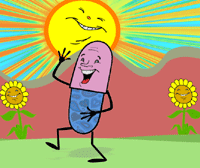
The video to the song, produced by the Animation Farm, depicts sad, sickly characters experiencing awful side effects, and a happy pink pill dancing across a psychedelic sun filled backdrop.

The song and video are available on line at www.prescriptionforchange.org.

Look at it, sniff it, touch it, sniff it again. Is it food?


GoAnimal.com recently featured an article comparing real food to processed food.

"Look at it, sniff it, touch it, sniff it again. What is it? Is it edible? Will it be tasty? Will it make my body happy or will it make me sick? Animals ask these questions every day; the answer is fundamental to their health and survival."

Do you know how to tell the difference?

Food:
  • Grown
  • Messy
  • Variable quality
  • Goes bad fast
  • Requires preparation
  • Vibrant colors, rich textures
  • Authentically flavorful
  • Strong connection to land and culture

Food product:
  • produced, manufactured
  • neat, convenient
  • always the same
  • keeps forever
  • instant results
  • dull, bland
  • artificially flavorful
  • no connection to land or culture

The article continues: "The single most important thing we need to know about nutrition in the modern world is how to recognize the difference between food and food products. Once we’ve learned to make this distinction, our nutritional decision-making process will rest on a solid foundation. Simply follow this basic rule for healthy shopping and eating:

"Choose food over food products. Eat all the food you want, but avoid food products whenever possible.

"That’s it, the first rule for intelligent eating in the modern world. If we can manage this distinction with consistency, our health will improve and our anxieties about nutrition will diminish considerably. This may very well be the only rule for nutrition that we’ll ever need."

It's sound advice. Too bad so few of us heed it.

The article continues: "If in doubt, follow the money. Food may be expensive, but it rarely brings outrageous profits to those who produce it. Food products, on the other hand, bring enormous, occasionally obscene profit to manufacturers.

"Quite naturally, food product manufacturers put their marketing dollars where they will bring the most financial return. That’s why most of their advertising efforts go into food products, not food. We occasionally see an industry trade group that sponsors an ad campaign for say, California grapes, but in general, food is pretty much left to fend for itself in the marketplace. This gives us a another general rule: if it’s advertised, it’s probably a food product.

"In turn, this leads us to adopt a new strategy of paradoxical consumption. That is, if we’re intent on eating food and avoiding food products, we’ll go against the flow of marketplace persuasion: the more intense the marketing, the less we purchase. Simply avoid anything that's advertised. Instead, buy and consume the invisible stuff –the vegetables, fruits and nuts that you find in the produce section of your market. If someone is promoting it, avoid it. If it's all sexed up, it's probably poisonous. If no one’s yelling at you to buy it, it’s probably safe to eat."

Wednesday, August 24, 2005

"Fat": The other f-word

Oh, for God's sake!

Today's news brings us the story that a fat woman has complained to the New Hampshire State Board of Medicine that a medical doctor she was seeing called her fat. The case ended up being "investigated" by the state's Attorney General, and board member Kevin Costin is on the record as saying, "Physicians have to be professional with patients and remember everyone is an individual. You should not be inflammatory or degrading to anyone."

What a bunch of woosies! Not only is the woman fat, but she's a crybaby, too.

Other fat -- yes, I'll keep using the word, thank you very much -- patients of Dr. Terry Bennett have come to his defense. One patient, Mindy Haney, told a TV reporter, "What really makes me angry is he told the truth." "How can you punish somebody for that?"

Haney said Bennett has helped her lose more than 150 pounds, but acknowledged that the initially didn't want to listen.

"I have been in this lady's shoes. I've been angry and left his practice. I mean, in-my-car-taking-off angry," Haney said. "But once you think about it, you're angry at yourself, not Doctor Bennett. He's the messenger. He's telling you what you already know."

In our politically correct world, I wouldn't doubt that soon we'll be expected to refer to the word "fat" as the "f-word." Oh, wait -- we already have an f-word.

School nutrition is finally on the table

A few years ago I read about Appleton Central Alternative High School's Nutritional and Wellness Program. Basically, they revamped the school's menu, and saw a phenomenal increase in concentration and improvement in behavior. This school's students weren't from the mainstream, but were described as having "exceptional personal needs and [being] characteristically credit deficient, continually disruptive in class, and/or frequently truant. Often they struggle with psychological and emotional problems and come from dysfunctional home environments. Some students struggle with issues of teen pregnancy/parenthood, drug addiction, homelessness, and trouble with the law."

Begining in 1997, junk foods were removed from the school, healthy foods brought in, and no student was denied healthy meals. Those who could not afford school lunch meals were subsidized.

Almost instantly, the positive changes in behavior were noted. Over the first five years of the program, "Junk Food Days" were held occasionally, with "sugar sweetened soda and Kool-Aid and... chips, brownies, cookies, Pop Tarts and candy bars" the daily fare for students and staff. students are “wired” and are unable to focus. Jennifer Keeley's Case Study reports that "throughout the day they complain of stomachaches, headaches, and feeling tired. Dean of Students Greg Bretthauer said that attendance is low following Junk Food Day. After a day of sugar highs and lows, both students and staff have stated that they never want to do it again." Junk Food Days were discontinued in 2003.

Fortunately, other school systems were paying attention. This week, article after article has appeared talking about how junk food is being removed from school vending machines, replaced with healthy choices. So far 42 states have enacted laws about serving healthier foods to students. This is an exceptional turn of events that I'm very happy to see.

Predictably, though, the press pushes things to the extreme, and is now focusing on and complaining that fast food outlets are too near schools for changes in school nutrition programs to make a difference. Will Congress overreact and create Junk Food Free School Zones where you can't build a fast food outlet within one mile of a school? I wouldn't be surprised....

Recent stories include:

Sunday, August 21, 2005

Duke's Geriatric Dozen

(A song by Dr. Duke)

The only herb I take; On every single day
Cel’ry lowers uric acid; And keeps the gout away.
The drug it costs a whole lot more The allopurinol
Cel’ry does it just as well, It really works, you all.
Feel them coming on, Bronchitis, colds and flus?
I’ll take echinacea The herb I always choose.
I also take the garlic, almost every day
The grandkids kinda shy away, AND keeps their germs away
I often memorize my lines; But sometimes I do not
That’s when I take my ginkgo But, YOU GOT IT, I forgot
Bilberries, blueberries, raisins, and grapes, the vine called Vitis
That’s where we get the raisins, To master maculitis
Travel is bedraggling; Airports such a mess!
That’s when I take my kava, To mellow down the stress
Zoloft is more often used, But old Saint John is best
Puts you in a better mood With fewer side effects.
Prostate glands will grow; When old age comes along
When I take saw palmetto; Don’t tinkle all night long.
Synthetic drugs they can disturb Your vital synergies
But hawthorn is a gentle herb To prevent the heart disease
Celebrex may have killed some men But not me, what me worry
With my arthritis kickin’ in; just up my dose of curry
Turmeric’s antiarthritic As it seems to displace;
Cyclooxygenase
And if you’re overliving There’s one herb you should choose
Milk thistle saves the liver; From the mushrooms and the booze.
Compression stockings, atrocities, gimme horsechestnut pills
To slow down varicosities; Better than drugs will
We often talk in alphabets, EPO and GLA
Will help to put to rest BPH and PMS
Been taking evening primrose; Two decades more or less
And almost everybody knows, I ain’t got PMS

FINAL EXAM (With Answers)
Whattaya take for gout? Celeryseed! For Flu? Echinacea! For High Cholesterol? Garlic! For the liver? Milk Thistle! For the memory? Ginkgo! For Arthritis? Turmeric! For CVI? Horsechestnut! For the heart? Hawthorn! For BPH? Saw Palmetto! For PMS? Evening Primrose! For stress? Kava! For Depression? St. Johnswort! For failing eyesight? Bilberry!

Friday, August 19, 2005

You're never too old


Sir Mick and the Stones say, "You're never too old." They'll keep on playing as long as people want to hear them.

Age is definitely a function of the mind and not specifically of the calendar. Too many people succumb to the belief system that says you have to feel this way at a certain age, or that you have to stop doing something at a certain age. How many times have you heard someone say, when (usually proudly) discussing their particular infirmity or malady, "I'm just gettin' old." As if that explains it.

Yes, things wear out. We'll all die. But that's no reason to program your brain and your mind and your body with premature thoughts of being unable to do this or that.

I've done a bit of online dating in the last year, and met a lot of women aged 40-50. It's an interesting age bracket. And there are two noticible categories of women in that group... those that act "old" and those that don't. Women who believe that age 40-50 is "old," invariably look older. Their posture, their skin, their attitudes... they ARE old. 'Cause in their minds, they believe they are.

And that's the way it works. Believing you're old makes you old, not the other way around.

As Mick Jagger says, "...If you have creative energy, age doesn't matter."

Keep on creating yourself as a young person, no matter how many candles you have on your cake.

Thursday, August 18, 2005

Is it right?

"Cowardice asks the question, 'Is it safe?' Expediency asks the question, 'Is it politic?' Vanity asks the question, 'Is it popular?' But, conscience asks the question, 'Is it right?' And there comes a time when one must take a position that is neither safe, nor politic, nor popular, but one must take it because one's conscience tells one that it is right." — Dr. Martin Luther King, Jr.

Wednesday, August 17, 2005

How do you respond?


(Dr. Clerkin is one of my oldest and closest friends, and has taught me a lot about gaining clarity and living in the Now. This entry is from his In Touch newsletter from June, 2005. Dr. Clerkin is a practitioner of Network Spinal Analysis and Somato-Respiratory Integration, and is the Director of The Center for Holistic Health, with offices in Decatur and Woodstock, Ga.)

By Gene Clerkin, D.C.

Most people probably don't know this, but there is a difference between illness and having a disease. There are many people that have no presentable disease symptoms yet they are very ill. Some people have a disease and are well at the same time. How can that be? How can someone have a disease and be well all at the same time?

I've heard that quite a few people have recently endured the cleansing that may occur in conjunction with some flu or virus. Apparently it can be pretty uncomfortable. The other day one of my clients who survived this bout commented on her experience. Even though she felt physically horrible, she experienced it from a different perspective than in the past. She had trust that her body knew exactly what it was doing to cleanse itself. Instead of having the feeling of being victimized she felt empowered by the process.

That is a perfect example of wellness behavior.

Illness is not about the symptom; rather it is about the state of mind a person has about that symptom, and for that matter, every other aspect of their life. In illness behavior we react to the processes of the body and of life with fear. Wait a second... we were talking about symptoms and sickness and now we're talking about life?

I also have another client who had recently been confronted with some very major life challenges. A good many people would respond to her situation by shutting down and going into a defensive or protective physiology repeating the cycle of unending anxiety and depression about the present situation. We call that "stage one" in the healing process. So what did she say? Loosely quoted, "I know this will be a challenge but, I'm sure there is a reason for this and that ultimately it creates new opportunities for change and growth."

Wow, now that is wellness behavior.

Protective or defensive physiology does not allow for that kind of response. When we're in stress physiology the part of the brain that allows for a conscious observation and healthy response is unavailable. Since we're only accessing the lower or reactive part of our brain, our responses are skewed by the filter of our past wounds.

When we experience a situation that is deemed unsafe, uncomfortable or damaging to our sense of self, our brain goes into defensive physiology to protect itself from that information. We release chemicals that effect heart rate, blood pressure, and cause us to tighten down and become inflexible. If we continue in that state, which most people do, our system is not flexible enough to adapt to new and potentially stressful information.

Wellness and illness are about how we respond and adapt to our symptoms and to our life. How would you respond to a symptom, a disease or a life crisis? How have you responded in the past? The answer to those questions will help you get an idea of your own level of wellness.

It might also be noted that wellness is open ended, which means that you can always achieve a greater level of it. In fact, in a research study conducted at the University of California, it was found that people in Network Care, tracked over a period of nine years, appeared to have no ceiling to the level of wellness they experienced. Network Care operates in the wellness model helping people develop strategies to recover from stress physiology, adapt to future stresses and access the part of the brain which enables healthier choices and responses... regardless of symptoms.

Limonene, lungs and the Biblical citron

(Another guest blogging by Dr. Jim Duke)

Israeli scientists (Keinan et al, 2005) suggest that the monoterpene limonene which constitutes more than half of the Biblical citron's essential oil might help asthmatics, especially those aggravated by ozone pollution. I posed a few questions to the good doctor. Could poor children here in our inner cities, where asthma is increasing dramatically, reduce their asthma attacks and or symptoms, especially when around ozone pollution, as on school buses in inner cities, by squeezing citrus peels (apparently all contain limonene) and inhaling the pleasant aroma periodically. Since the sedative antiinflammatory limonene is also absorbed thru the skin, rather rapidly I might add, I'd also try adding crushed citrus peels to bath water which might help as well, say at the end of the days commute. Keinan's group predicted that electron-rich olefins, which are known ozone scavengers, could be used for prophylactic treatment of asthma. Volatile, unsaturated monoterpenes, like limonene, could saturate the pulmonary membranes equipping the airways with local chemical protection against either exogenous or endogenous ozone. In his experimental rats, limonene inhalation significantly prevented bronchial obstruction (eucalyptol, alias cineole, saturated and inert to ozone, did not). I doubt I can convince our government to compare citrus-inhalation in clinical trials as a third arm against placebo and some expensive pharmaceuticals. As a gray-headed botanist, I cannot and do not prescribe. But if I had a hundred asthmatic grandchildren, you could bet half of them would be trying citrus peel and others would not, followed by a vice versa cross-over, recording the frequency and severity of their attacks for old grandpa. Faith-based types might best be praying too, and using the peel of the Biblical citron, called ethrog or etrog in some versions of the Bible. Without praying to improve my odds, I'll still bet the citrus peel would score well along side the pharmaceuticals. I know it would be cheaper and bet it'll be safer, possibly as efficacious. We'll never know until there are unbiassed clinical trials.

That asthmatic possibility is relatively new; it's been known for a decade that limonene could also prevent cancers as well. Mondello et al (1995) found that limonene was the most frequent monoterpene component in all the citrus oils that they examined, varying from 50% in lime oil to about 97% in grapefruit oil. Its about 52% in the etrog. d-Limonene works in preclinical models of breast cancer, causing > 80% of carcinomas to regress with little host toxicity. (Crowell et al, 1994). More reecently Tsuda et al (2004) singled out as promising cheoipreventive anticancer phytochemicals vitamin derivatives, phenolic and flavonoid agents, fatty acids, organic sulfur compounds, isothiocyanates, curcumins, and d-limonene. Those last four suggest a Biblical chutney. the garlic and onion for organic sulfur compounds; watercress and horseradish for isothiocyanates, turmeric for curcumin, and citrus peels for limonene. Lu et al (2003) showed that D-limonene exerts its cytotoxic effect on gastric cancer cells by inducing apoptosis. Parija et al (2003) and Kaji et al (2001) reiterate the well known anticarcinogenic activity of d-limonene mentioning also is chemopreventive nature in hepatocarcinogenesis.

But this is the month when we focus our blogs on lung cancer. PubMed only has 11 citations re limonene and lung cancer. But if I were diagnosed with lung cancer today, Id be ingesting more garlic and more citrus too. I might even be inhaling limonene-containing essential oils as I squeezed citrus peels. Raphaeol et al (2003) note that several naturally occurring monoterpenes, like carvone, limonene and perillic acid, inhibit experimental lung metastasis. Limonene at 100 uM/kg body wt. 10 doses ipr remarkably reduced metastatic tumor nodule formation. Limonene and perillic acid just might even inhibit the metastatic progression of melanoma cells.

I doubt that Witschi (2000) would join me in judiciously inhaling citrus essential oils. Under the catchy title, "Successful and not so successful chemoprevention of tobacco smoke-induced lung tumors." Wirschi notes that none of the following "chemopreventive" agents: green tea, phenethyl isothiocyanate, acetylsalicylic acid, N-acetylcysteine, 1,4-phenylenebis[methylene]selenocyanate and THE d-limonene reduced lung tumor multiplicity or incidence. I'd still be eating my garlic and brazilnuts and inhaling my citrus, even though no clincial trials have indicated their safety or efficacy, if I feared lung cancer. I suspect they will do as much good and less harm at a much lower cost, economically, mentally and physically, than the chemotherapeutic cocktails being offered by the allopaths and their covert sponsors, the pharmaceutical firms. Many people believe more in the faith-based botanical herbs than they do in the allopathic ACS and NCI chemotherapeutic poisons. Such people have a better chance of being helped by these safer food farmacy items, also improving their odds against the other diseases of modern man, cardiopathy and diabetes and iatrogenesis.

FDA refuses to withdraw Meridia despite 50 deaths, health dangers


The FDA banned ephedra last year, on trumped-up charges that it killed an overweight, out of shape pro baseball player wannabe, something never proven and never confirmed by autopsy. Ephedra was popular as a weight loss herb. It worked by suppressing the appetite and increasing metabolism.

Yet, after twice being asked (in 2002 and again in 2003) to withdraw the appetite-suppressing prescription drug Meridia, the US FDA today again rejected Consumer advocacy group Public Citizen's request.

Side effects of the drug range from headaches and constipation to higher blood pressure and a faster heart rate, according the Public Citizen.

Public Citizen's Health Research Group Director Sidney Wolfe said the 50 heart-related deaths reported since the drug's approval still warrant its removal. While Meridia use has dropped, "many people are still getting this dangerous but not very effective drug," said Wolfe.

The manufacturer of Meridia, Abbott Laboratories, Inc., criticized Public Citizen's analysis and said Meridia had repeatedly been proven safe and effective.

The FDA concluded that "sibutramine's overall risk-benefit profile supports it remaining available as a prescription drug for the treatment of appropriately selected obese patients," wrote Steven Galson, head of the agency's drug division.

Apparently Galson was paying no attention to FDA veteran scientist David Graham when he said Meridia should be one of the top five prescription drugs scrutinized when he spoke at a congressional hearing in 2004.

RxList.com lists side effects of Meridia including headache, back pain, vomiting, nausea, chest pain, abdomninal pain, palpitations, tachycardia, increased blood pressure, migraines, neck pain, vasodilation, allergic reactions, constipation, increased appetite, dyspepsia, anorexia, dry mouth, insomnia, dizziness, rhinitis, pharyngitis, dysmenorrhea, sweating, rashes and a host of other symptoms and maladies, at much higher rates than chance or placebo. Clearly, a drug capable of making you feel bad. Very bad.

So -- it's okay to ask your doctor for Meridia, but you still can't buy ephedra, even though a judge in Utah said the FDA overstepped its bounds in banning it in 2004.

Fresh orange juice or chemical concoction?

While reading about the grapefruit aroma story (below), I came across this article about engineered orange juice.

Did you know that "fresh squeezed" smell when you open a carton of orange juice comes from a chemical "flavor pack" made of stuff not exactly, er, fresh and natural? That "heart-healthy" drink they push on a.m. television commercials is really a chemical soup which incidentally, apparently, also contains a bit of concentrated orange juice.

Yuck.

A little more googling led to this article from the Agricultural Research Service, the research arm of the USDA. The flavor and smell of your reconsituted O.J. consists of over 40 terpenes, alcohols, esters, and aldehydes, which, last time I checked, don't actually grow on terpene, alcohol, ester or aldehyde trees.

Dr. Duke (see other postings), formerly of the ARS of the USDA, says that while the chemical constituents taken or evaporated out of the orange juice was natural, we as consumers have no way of if the chemicals added back in are natually-sourced or cooked up in a laboratory.

But somehow it just doesn't sound appetizing.